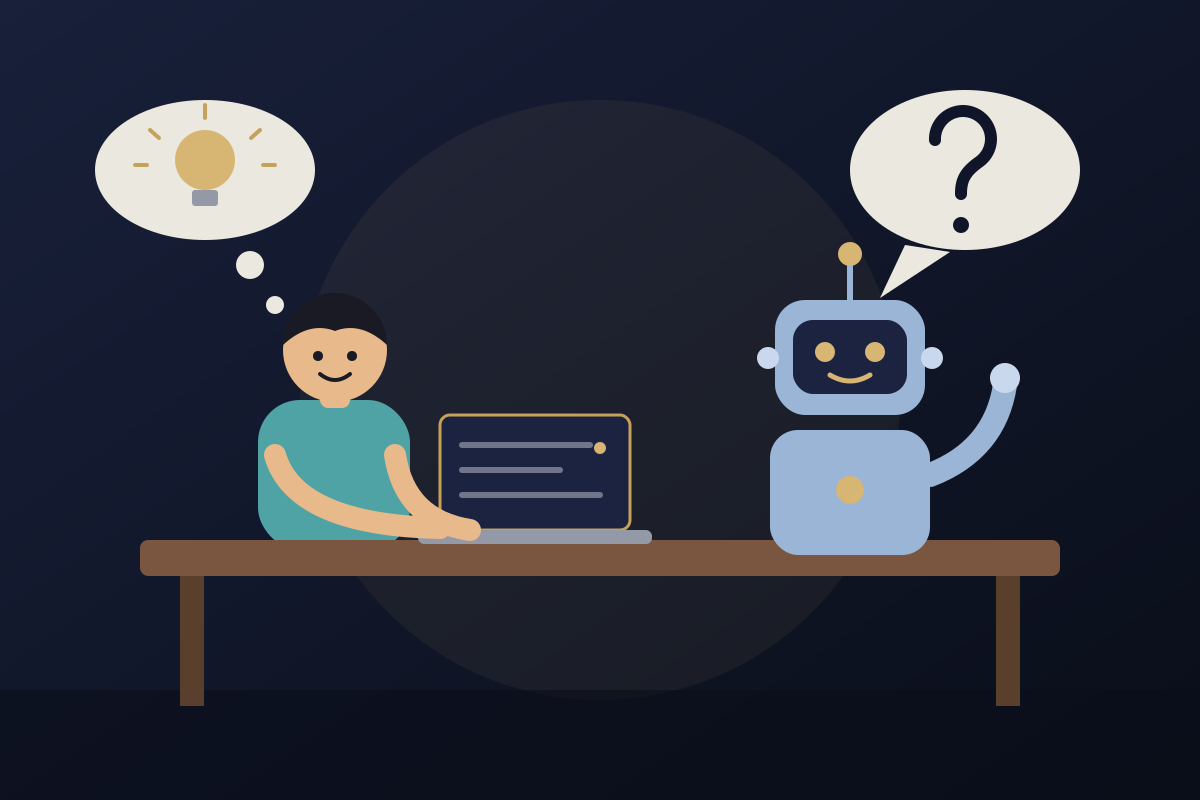
Every semester I see the same fork in the road. A student gets an assignment, opens a chatbot, pastes the question and hands in whatever comes back. The writing is clean. The student has learned nothing.
I do not blame the student. The tool is free, fast and awake at midnight. If we only tell students not to use it, we lose, because they will use it anyway and stop telling us. If we pretend it changes nothing, we also lose. My position is simple: AI should be a tutor, never a ghostwriter. The difference is who does the thinking.
I have taught at multiple universities, and I now train professionals and school teachers to use AI. The pattern is the same in every room. People who use AI to skip thinking get weaker. People who use it to think harder get stronger. Same tool, opposite results.
The ghostwriter trap
A ghostwriter delivers a finished product. That is useful when you need a product. It is useless when you need to learn, because learning happens in the struggle that the ghostwriter removes.
Take a common case from an economics or statistics class. A student runs a regression and has to explain what the coefficient means. If the chatbot writes the explanation, the paragraph will be fluent and usually correct. Then I ask one follow-up question in person: what would change if the sample were only rural households? The student goes quiet. The words were never theirs.
This is the real damage. A smooth paragraph used to be decent evidence of a clear mind. It no longer is. That hurts the student, who walks away without the skill. It also hurts the teacher, who can no longer see where the student is stuck.
What a tutor does differently
A good human tutor rarely gives the answer. She asks a question, waits, and asks a better one. The good news is that chatbots can be told to behave this way. Most students never try, because nobody showed them how.
Here are three prompts I give in class. The first: 'Do not give me the answer. Ask me one question at a time until I can explain price elasticity in my own words.' The model now plays tutor, and the student has to produce thinking before getting any help.
The second: 'Here is my explanation of what a p-value means. Tell me what is wrong with it, but do not rewrite it.' The student keeps authorship and gets feedback, which is what a teacher with fifty papers to mark rarely has time to give.
The third: 'Quiz me on this chapter with five questions, getting harder each time. Wait for my answer before showing the next one.' This turns passive reading into active recall, one of the best-supported habits in learning research.
None of these prompts is clever. What changes is the role. The student asks the model to push, not to carry.
Three habits I ask students to build
First, try before you ask. Write your own attempt, even a bad one, before opening the chatbot. A weak first draft is a map of what you do not yet understand. Skipping it means skipping the map.
Second, keep the thinking visible. I ask students to save the conversation and hand it in with the work. This is not to catch them. It shows me how they used the tool, and it shows them the difference between a conversation that taught them something and one that only produced text.
Third, verify at least one claim. Language models state wrong things in a confident voice, and they sometimes invent citations that look real. Pick one number or one reference from every AI answer and trace it to the source. Students who do this twice rarely stop doing it.
What teachers can do on Monday
Say plainly what is allowed for each assignment. 'Use AI however you like' and 'do not use AI' are both unclear. A better line is: you may use AI to quiz yourself and to critique your draft, but the draft must be yours. Students respect clear rules far more than vague threats.
Show AI failing, live, in class. Ask a chatbot for a statistic about Nepal, then trace it to the official source together. Sometimes the answer is right and sometimes it is not. The lesson is that nobody can tell without checking, and that is the lesson you want every student to leave with.
Finally, use the tool yourself, in front of them. Students learn more from watching a teacher doubt an AI answer than from any policy document.
And give students a way to be honest. If a student fears punishment for admitting they used AI, they will hide it, and you lose the chance to teach them to use it well. A class where students say 'I used it to check my reasoning, and here is what I changed' is a class where real learning is visible. Build that trust early, and reward the students who show their process.
None of this needs a new budget or a new platform. It needs a teacher willing to change a few assignments and a few habits. That is a smaller ask than it sounds, and the return is a classroom where AI makes students more capable, not less.
One assignment, two ways
Let me show the difference with a single task: write a short note on why prices rose in a local market last year.
In the ghostwriter version, the student types the task into a chatbot and pastes the answer. It mentions supply chains, fuel costs and demand. It sounds right. The student could not tell you which of those factors mattered in their own town, because they never looked.
In the tutor version, the student first walks through the market, or asks a parent, and writes three rough reasons in their own words. Then they ask the chatbot to play a sceptical economist: which of my reasons is weakest, and what evidence would I need to defend it? The model pushes back. The student goes to find a price record or asks a shopkeeper. The final note is shorter and plainer than the chatbot version, but every sentence is something the student can defend.
The second path takes longer. That is the point. The extra time is the learning.
Where AI tutoring falls short
I do not want to oversell this. A chatbot tutor has real limits. It does not know your syllabus unless you tell it. It can be too agreeable, praising a weak answer to keep the conversation pleasant. It can explain a concept wrongly in a friendly tone. And it cannot notice that a student looks tired or lost, as a good teacher can.
So I treat AI tutoring as a supplement. It is a patient practice partner for the hours when the teacher is not there, which in a crowded class is most hours. The human teacher still sets the goals, checks understanding and notices the student who has stopped coming.
There is also a fairness question. A student with a good phone, stable internet and some English gets far more from these tools than a student without them. If we introduce AI tutoring without teaching it openly to everyone, we will widen the gap we hope to close. Teaching these habits in the classroom, to all students at once, is one way to avoid that.
A simple test
When I am unsure whether a use of AI is healthy, I ask one question. Could the student do a smaller version of this task tomorrow, without the tool? If yes, the AI was a tutor. If no, it was a ghostwriter.
Education has always been about building capability inside a person's head. The tools change every decade. That goal does not, and we should refuse to trade it for a clean-looking assignment.